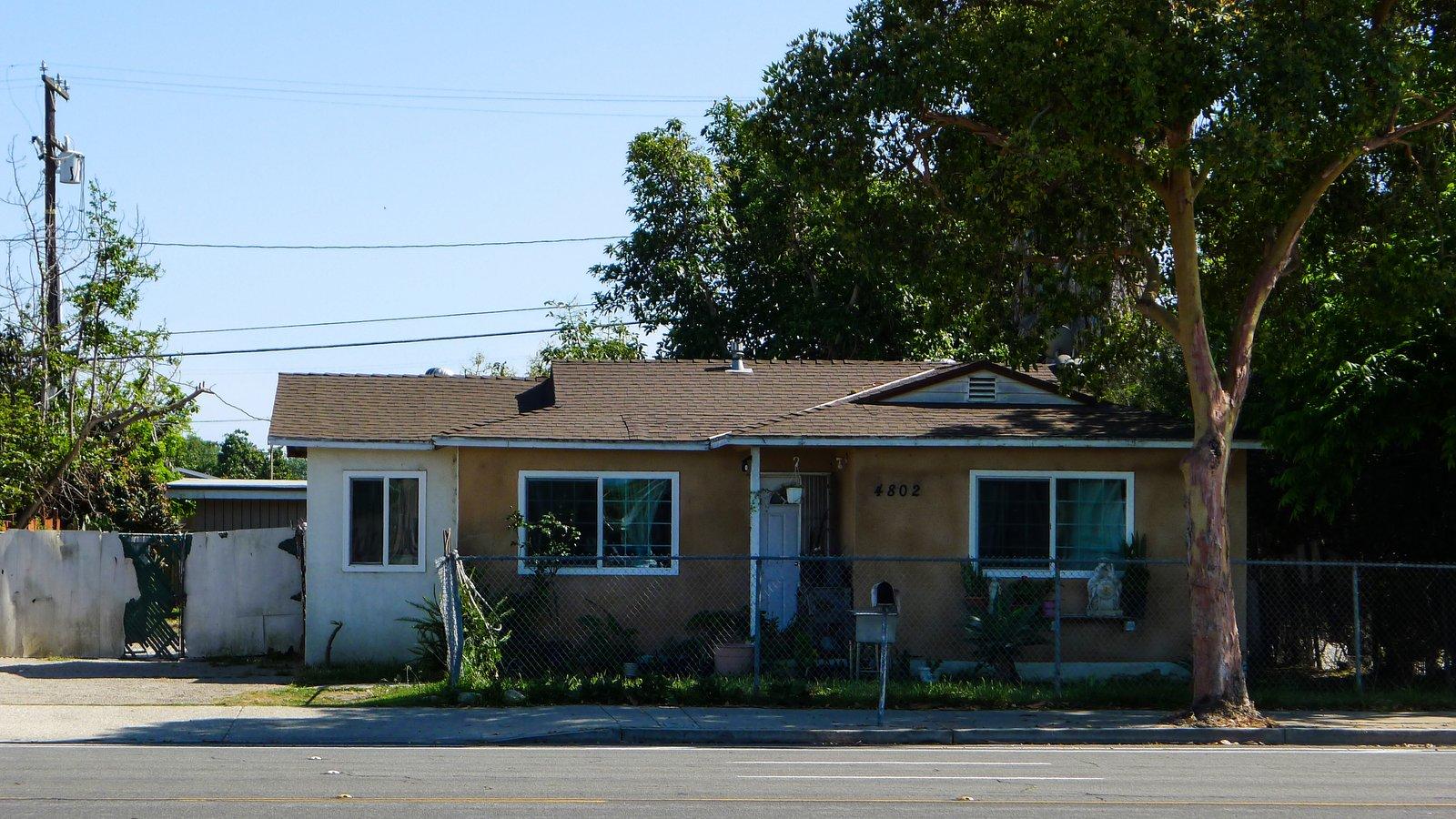
Nine days in, it is time to step back and connect the dots. Phase 1 of this series has laid the foundation: what the site is, why assemblage matters, how California law can help, and where the market stands. Here is the consolidated thesis for 4802 W 1st Street and its neighbor at 4728 W 1st Street.
The site
The standalone parcel (APN 108-101-49) is approximately 8,712 square feet (0.20 acres), listed at $1,655,000. Combined with the adjacent lot, the assemblage reaches roughly 18,092 square feet (0.415 acres), a scale that supports a 14 to 20 unit townhome community.
The assemblage logic
Controlling both parcels eliminates holdout risk, enables a more efficient site plan, and spreads fixed costs across more doors. Under the campaign's working underwriting, the combined land basis is about $1.7 million, or roughly $85,000 to $121,000 per door.
The legislative framework
Two state-level tools shape the opportunity:
- SB 6, which may allow qualifying residential development on certain commercially zoned corridor parcels without a full rezoning
- The density bonus, which can add 20 to 50 percent more units, helping move a 14-unit base scheme toward 20
Neither is automatic, and both require careful review by qualified professionals.
The market
Orange County's chronic housing undersupply, combined with the high cost of detached homes, supports demand for townhomes priced in the $750,000 to $950,000 range. Infill projects also offer faster speed-to-market than master-planned alternatives, and the West First Street corridor continues to evolve.
The financial vision
Putting it together, the campaign's projections are:
- Gross sellout: $10.5 million (14 units) to $15.2 million (20 units)
- Developer profit: $2.5 million to $5.0 million
- Timeline: roughly 24 to 36 months from start to sellout
These are projections, not promises, and every buyer should perform independent diligence.
What is coming next
Phase 2 shifts from vision to feasibility. Over the next nine days we will explore:
- Architectural typologies for three-story townhomes
- Utility and infrastructure capacity
- Parking and access engineering
- Environmental due diligence
- Concurrent acquisition mechanics
- Santa Ana's permitting workflow
- Open space and landscape design
- Hard cost benchmarks
- Nearby comparable sales
Your next step
If this thesis fits your strategy, now is the time to engage. Request the due diligence package, review the property profile and speak with the listing team about the assemblage and bidding process.
A closer look at the risks and mitigants
A good thesis is honest about what could go wrong. The main risks in a project like this fall into four buckets: entitlement and legal interpretation, construction cost inflation, interest rate and financing conditions, and sales absorption. Each has a mitigant. Early legal review addresses interpretation risk. Fixed-price bids and contingency lines address cost. Conservative leverage and flexible exit options address financing. A sensible price point and experienced sales partners address absorption. Throughout Phases 2 through 5, we will test each of these in more detail.
How to use this series
Treat the next 36 days as a working checklist. Save the articles that match your role, share them with your attorney, architect, lender and tax advisor, and compile your questions for the listing team. A buyer who arrives at bid day with answers already in hand will always have an advantage over one who is still learning the basics.
Finally, remember that a thesis is only as good as the questions it survives. Share this recap with your advisors and ask them to challenge it. The strongest bids come from teams that have already tried to break their own assumptions before bid day arrives.
This content is for informational purposes only and is not legal, tax or investment advice. Projections are estimates, not guarantees. Listing brokerage: Century Financial Group.