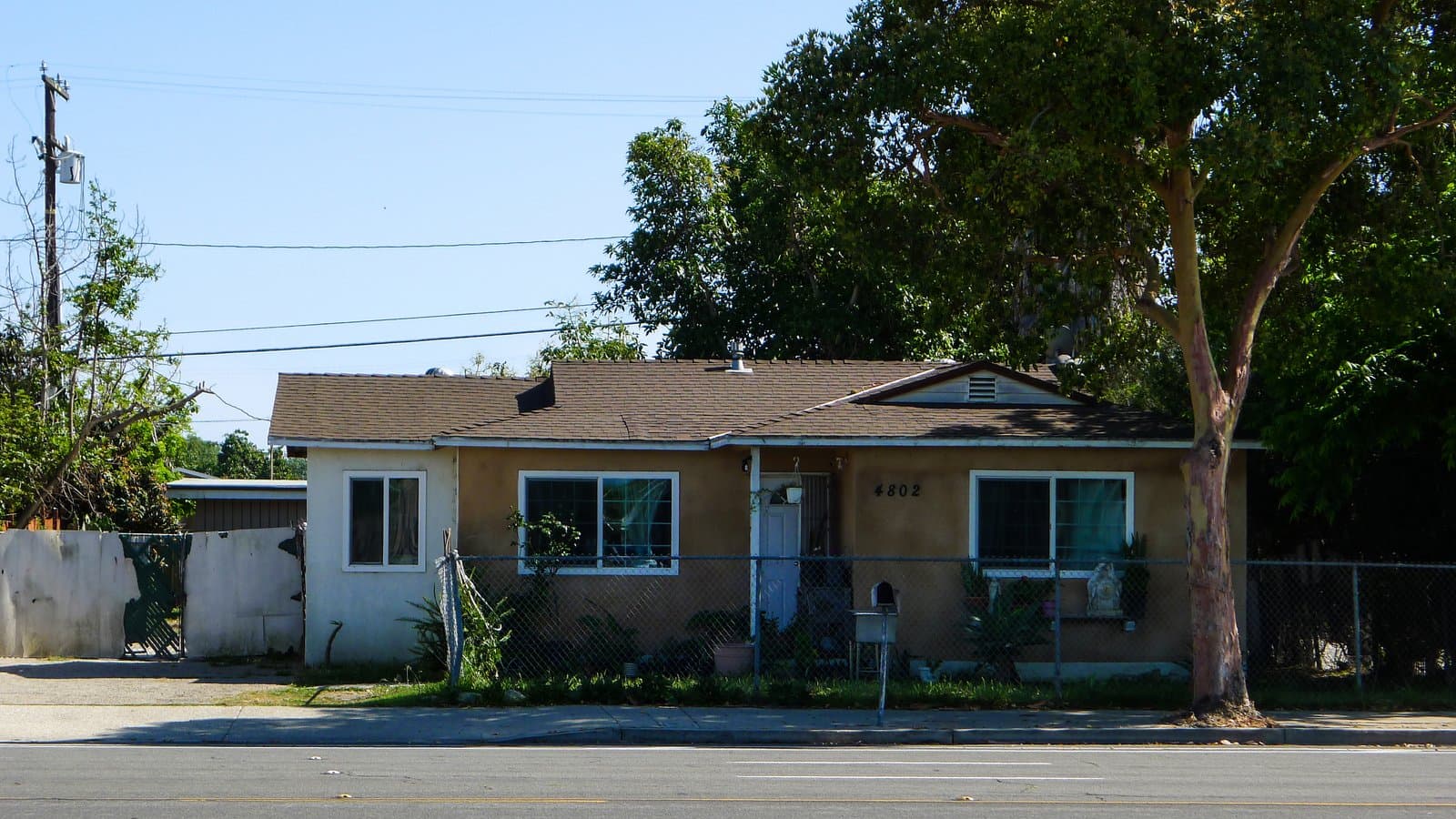
Great infill investments are rarely accidents of geography. They are located where change is already underway. The stretch of West First Street between Euclid Street and Harbor Boulevard in Santa Ana is one such place, and 4802 W 1st Street sits within it.
A corridor in transition
First Street is one of Santa Ana's major east-west arteries. Like many older commercial corridors across Southern California, it developed around auto-oriented retail, small businesses and services. Today, cities across the region are reimagining these corridors as places where housing, shops and transit can coexist, and Santa Ana has long been focused on revitalizing its urban core and major streets.
For investors, that shift creates opportunity. Older, lower-intensity commercial parcels can be repositioned into higher-value residential or mixed-use projects, helping to add the homes the region needs while supporting local businesses with new nearby customers.
Why corridors attract housing
Corridors offer attributes that residential developers value:
- Established infrastructure including utilities, streets and sidewalks
- Transit and arterial access for commuters
- Nearby services such as groceries, restaurants and schools
- Policy support, as state and local governments encourage housing along commercial corridors
What this means for the site
The combined assemblage of 4802 and 4728 W 1st Street totals roughly 18,092 square feet (0.415 acres). That footprint is large enough to deliver a meaningful 14 to 20 unit townhome community, and its corridor location positions future residents close to everyday amenities.
As more projects replace aging commercial buildings, nearby values often benefit from the improvement in street activity and neighborhood perception. Investors should confirm current plans, pending projects and city initiatives through the City of Santa Ana's planning resources instead of assuming a specific outcome.
Reading the signals
Smart developers look for a few indicators that a corridor is on the rise:
- Recent permits and approvals for residential and mixed-use projects
- Streetscape, transit or public-realm investments
- Rising land and rent values relative to nearby submarkets
- New retail and restaurant openings catering to a growing residential base
Reviewing these indicators gives a more grounded view than headline narratives alone.
Community considerations
Good development earns its place. Thoughtful design, pedestrian-friendly frontage, adequate parking and respect for neighbors build goodwill and smooth the approvals process. A for-sale townhome community also brings homeowners with a long-term stake in the neighborhood.
The financial lens
With a combined land basis near $1.7 million, a projected gross sellout between $10.5 million and $15.2 million, and projected developer profit of $2.5 million to $5.0 million, the project is underwritten to capture value created by the corridor's transformation. These are projections and not guarantees.
Takeaway
Position matters. A parcel at the right point on a corridor in motion can deliver outsized returns for the investors who recognize the trajectory early.
Questions worth asking locally
Before underwriting, spend time on the street. Walk the corridor at different times of day, visit nearby businesses, and speak with neighbors and property managers about what is changing. Ask city staff about adopted plans, pending applications and planned infrastructure investments. Attend a planning commission meeting to see how similar housing projects have been received. This ground-level research often reveals details that no data set captures and gives the development team a realistic read on community expectations and approval dynamics.
Walking the street is also a good test of your own assumptions. Note how far transit stops sit from the site, how busy the cross streets are, and what kinds of businesses anchor each block. Those observations often shape the design brief and the marketing story.
This content is for informational purposes only and is not investment advice. Please verify neighborhood plans with the City of Santa Ana. Listing brokerage: Century Financial Group.