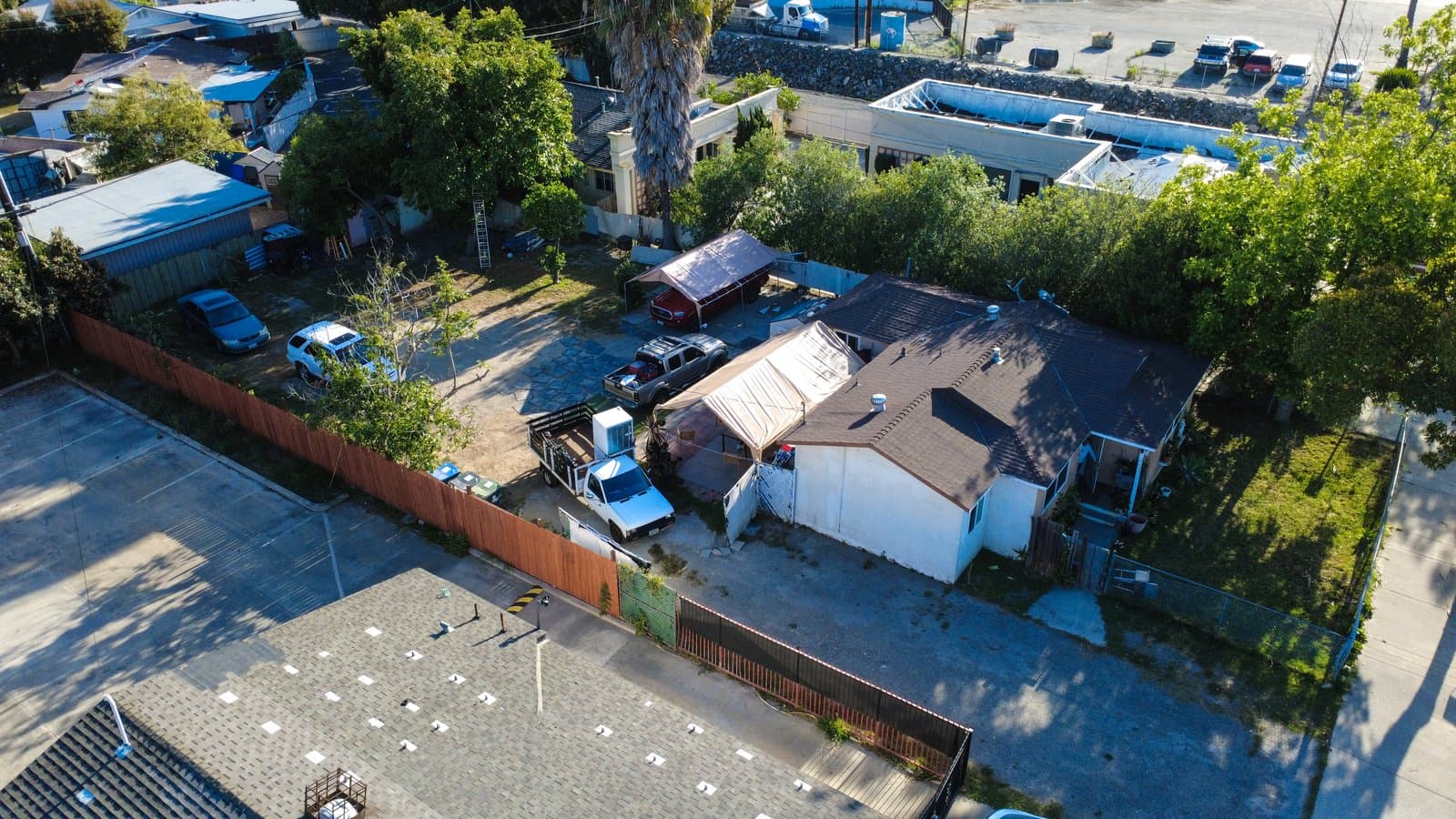
In real estate development, one plus one can equal three. Nowhere is that clearer than in land assemblage, the strategy of combining adjacent parcels to create a site that is worth more than the sum of its parts. The pairing of 4802 W 1st Street and 4728 W 1st Street in Santa Ana is a textbook example.
From 8,712 square feet to 18,092
The standalone lot at 4802 W 1st Street is approximately 8,712 square feet (0.20 acres). That is a workable infill site, but it limits the size and efficiency of any townhome scheme. Add the neighboring parcel and the combined footprint grows to 18,092 square feet (0.415 acres), more than double the standalone area.
That jump changes what is buildable in several important ways.
Why a bigger footprint builds better
- Efficient circulation. A wider site allows a proper drive aisle, cleaner fire access and a more rational parking layout instead of a tight, compromised plan.
- Better unit mix. More land area supports a more varied product, with end units, interior units and thoughtfully placed open space.
- Economies of scale. Fixed costs such as entitlement, design, civil engineering and site mobilization are spread over more doors.
- Higher unit count. The combined site can support a 14 to 20 unit townhome community, depending on the entitlement path and density bonus.
The economics of control
When a developer controls only one of two adjacent parcels, the owner of the other parcel holds leverage. A holdout can demand a premium, delay the project or block an efficient design. Assemblage removes that risk by locking in the full site before the entitlement and design investment begins.
Under the campaign's working underwriting, the combined land basis is roughly $1.7 million, or about $85,000 to $121,000 per door across a 14 to 20 unit program. Compare that with the projected gross sellout of $10.5 million to $15.2 million, and the logic of acquiring both parcels at the same time becomes clear. These figures are projections and should be validated by each buyer's own team.
Structuring the acquisition
Because the two parcels have different owners and potentially different terms, the structure matters. Buyers should consider:
- Concurrent escrows with cross-contingencies so neither purchase closes without the other
- A single-purpose entity to hold title and pool capital cleanly
- Aligned timelines for due diligence, so findings on one parcel can inform the other
We will go deeper on each of these in Phase 2 and Phase 5.
Who benefits
Value-add land investors, joint venture partners and syndicators are natural fits. For a sponsor who wants to raise equity against a defined business plan, a controlled assemblage is a far easier story to tell than a single small parcel with an uncertain neighbor.
The bottom line
Scale is the hidden variable in infill development. By treating 4802 W 1st Street and 4728 W 1st Street as one coordinated opportunity, a buyer can convert two modest lots into a single, more valuable development site.
To discuss assemblage strategy, schedule a call with the listing team.
Risk considerations
Assemblage is powerful, but it is not automatic. Title issues on either parcel, mismatched seller timelines or a change in financing conditions can all disrupt a coordinated closing. Build contingencies into both purchase agreements, confirm that legal descriptions align along the shared boundary, and consider whether a lot line adjustment or merger will be needed after closing. Experienced real estate counsel can help structure these steps so that the buyer keeps full control of the timeline.
This content is for informational purposes only and is not legal, tax or investment advice. Financial figures are estimates, not guarantees. Listing brokerage: Century Financial Group.